Business loan eligibility: know where you stand before you apply
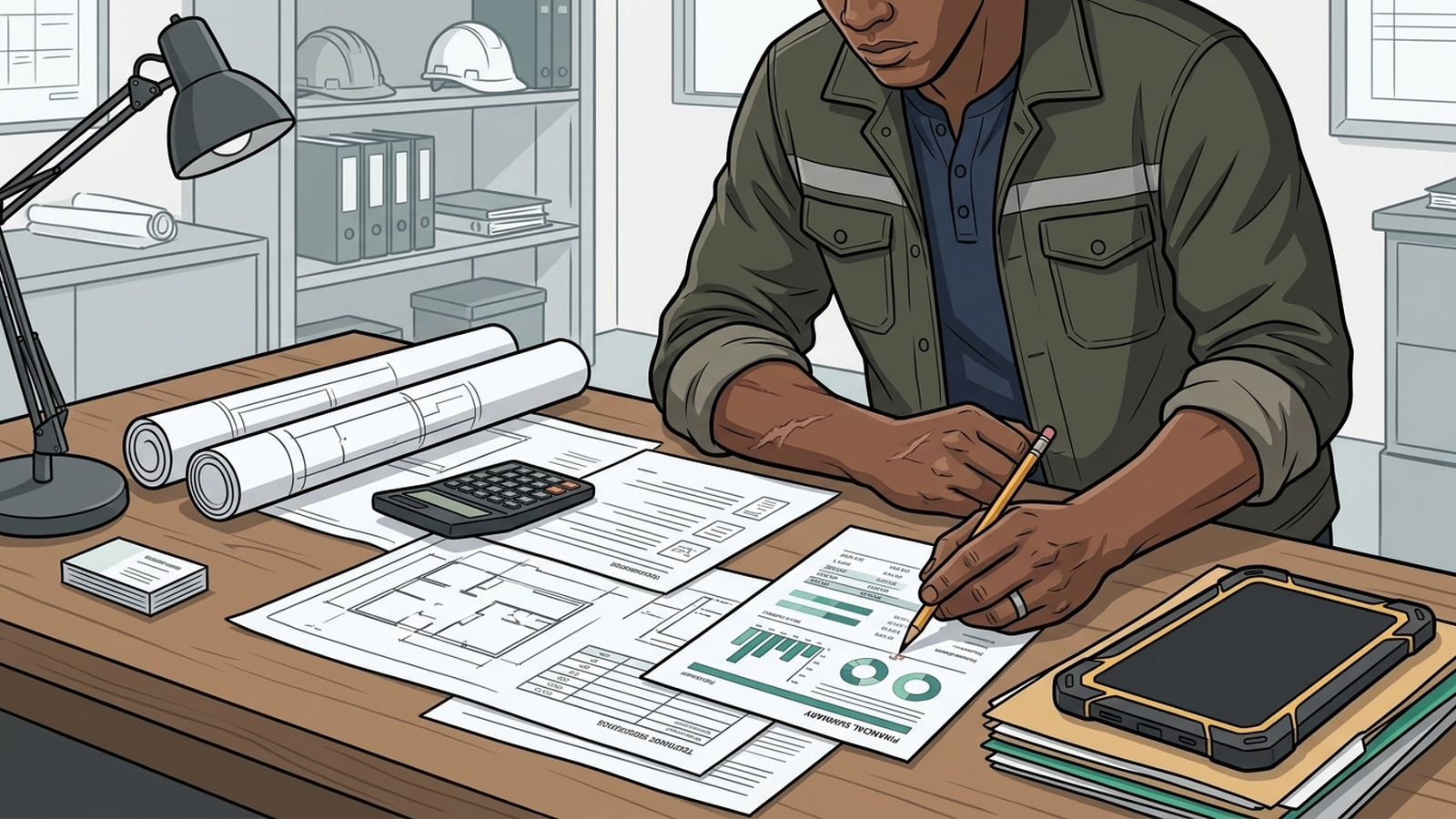
When owners search business loan eligibility, they want a plain answer: can I get this loan, or can't I?
A lender looks at your numbers and decides whether this loan fits your business. Can you make the payment after a slow month? Does your credit history look clean enough for that loan type? How long have you been open? What do you already owe? What is the money for? Do your tax returns, bank statements, and personal financial statement tell the same story?
Those questions matter more than a generic checklist you found online. You can meet every item on a public list and still stall if cash flow cannot carry the payment or the pages disagree with each other.
If you're shopping right now, start with a self-check you can finish this week. Don't start with five formal requests.
For the document side, see business loan requirements: what banks need and business loan documents checklist. What stalls real files before a credit meeting is usually simple: mismatched numbers, unexplained credit issues, incomplete taxes, a messy debt list, or cash flow that cannot cover the new payment.
What lenders weigh
| What they look at | What they are asking | What you can do |
|---|---|---|
| Cash flow vs payment | Will a quiet month still cover the note? | Write the payment next to a slow-month P&L |
| Personal credit | Do you pay other people as agreed? | Pull your own report; write plain notes on any problems |
| Business credit (if any) | Does the company have its own history? | Know what exists; don't invent a score |
| Time in business | Is there a track record? | Be honest on start date; pick loan types that fit your stage |
| Revenue stability | Is income lumpy or steady? | Show seasonality with bank statements, not guesses |
| Existing debt | What else already pulls cash? | List every loan, advance, lease, and card |
| Collateral / guarantee | What backs the risk if things go wrong? | Know what you will and will not pledge |
| Package quality | Do the documents agree? | Match the numbers once before anyone reviews the file |
Company messaging we stand behind: a large share of rejections are about how the package was prepared, not only whether the business is "good." Prep is eligibility work.
Credit score without the myth
People want one number. Lenders do not decide on one number alone.
You will see websites that say many bank and SBA-style loans like scores in the high 600s, and that some online or equipment loans start lower. Those are rough ranges from public education sites. They are not a rule for every bank. Your bank sets its own floor for each loan type. Always check what that lender wants for the loan you are asking for.
What you control this month:
- Pull your own personal credit and dispute errors.
- Write short explanations for late pays, medical collections, or a thin history.
- Stop stacking new hard inquiries while you are still guessing how much you need.
- If the score is rough, read the path: bad credit small business loans.
A high score does not save a messy file. Lenders match your tax returns, bank statements, and personal financial statement against each other. If those pages disagree, they stop and ask questions. That stop is what stalls the loan, even when the score looks fine.
Time in business and startups
Lenders call different loan types "products." You can think of them as different kinds of loans: a term loan you pay down over years, a line of credit you draw when you need it, an equipment loan tied to a machine, an SBA-backed loan with program rules, or a shorter online loan. Each kind has its own history and paperwork expectations.
Many bank term loans like to see about one to two years of operations. Some lines of credit and online loans accept less when your bank deposits look steady.
If you're starting a brand-new business, or this is still a startup, lenders lean harder on your personal credit, money you put in as the owner (owner injection), anything you can pledge as collateral, and a solid business plan with a forecast (also called a pro forma). Eligibility may mean a different kind of loan, a smaller ask, or more time building deposit and tax history before a bank term loan. Startup path: startup business loans: honest readiness.
Sole proprietors and business vs personal
If you are a sole prop, you can still qualify for many kinds of loans. Lenders often treat you and the business as one money picture. They still look at your personal credit, your personal tax returns, and a personal financial statement, even when the DBA feels separate.
Separate bank accounts and clean books still help. They make the story easier to read. They do not stop the lender from reviewing you as a person on a small business loan. On most small files, your personal credit and household cash still sit in the middle of the decision.
Loans without collateral
A lot of owners search "how to get a business loan without collateral" for a good reason. You do not want the bank able to take your house, your truck, or your equipment if a slow season hits. That fear is real.
Some loans are unsecured or lightly secured. That means the loan is not mainly backed by a specific asset the bank can seize. Those loans still look hard at three things: can cash flow carry the payment, does credit look solid, and will you sign a personal guarantee. A personal guarantee means you are on the hook as a person if the business cannot pay. Skipping a lien on the building does not create repayment ability. If a slow month cannot cover the payment, that loan still does not fit. It only changes what the lender can go after if things go wrong.
Prequal, soft pull, hard pull
Pull your own credit first. Know your score, your late pays, and your open accounts before a bank looks. Fix errors and write short notes on anything ugly. If credit is in bad shape, clean what you can before you invite a bank to hard-pull you.
A soft pull (common in prequal tools) can sketch a possible rate or amount range without the same credit hit as a hard pull. Useful for sorting options.
A hard pull is what most banks do when they are seriously reviewing a loan request. It shows as an inquiry on your credit report and can ding the score a bit, especially if several land close together. That is why you do not want five formal requests while you are still guessing.
Prequal is not a final yes. Full review still checks documents, taxes, debt, and what the money is for. Online sites that sound "pre-approved" still run a real review. More on speed channels: online business loans: speed vs readiness. Order of work: business loan application: get ready first.
A one-hour eligibility self-check
- Purpose: one paragraph on what the money does.
- Need vs capacity: dollars required; payment a slow month can carry.
- Credit: pull your own report and write notes on any problems.
- Debt list: every loan, advance, lease, and card with balances and payments.
- Taxes: filed, complete, and consistent with the story you will tell.
- Statements: recent business (and personal if asked) banks that match revenue claims.
- Business basics: legal name, EIN or SSN path, ownership percentages, IDs.
- Loan type fit: term loan vs line of credit vs equipment vs SBA-style vs short-term online. Map: best small business loans: how to choose.
If steps 2 and 4 already break the ask, you are not eligible for that amount on that structure yet. Resize the ask, change the kind of loan, or strengthen cash flow before you apply. That is clarity. It is not quitting.
SBA program rules and package path: SBA loan requirements: package before the portal. Full ordered path: how to get a business loan: the readiness path. Shopping once eligible: compare business loans with one package.
After a no
A turndown is data. Check whether the issue was credit, capacity, collateral, policy, or package inconsistency. Fix the file, then shop again with a complete package. Walkthrough: bank said no: what to check.
Where Zero2Ten fits
Zero2Ten is not a lender and does not decide eligibility. Lenders do. We help you see how lendable you are, match the package, and walk in knowing your numbers before a formal request. Free early access and tools: https://www.zero2ten.biz
Don't let the wrong loan cost you the business. Know your numbers first.
Common questions
- What is business loan eligibility?
- It means a lender looks at your situation and decides whether this loan fits. They care about cash flow after a slow month, credit, how long you have been open, what you already owe, what the money is for, and whether your documents tell one story. Every lender and every loan type sets its own bar.
- What credit score do I need for a business loan?
- There is no single score that unlocks every loan type. Many banks and SBA-style loans prefer stronger personal credit. Some online and equipment loans accept lower scores and charge more for it. Score is one piece. Unexplained problems on the report, thin cash flow, and documents that disagree still stall strong scores.
- How long do I need to be in business?
- Many bank term loans look for about one to two years of history. Some online loans and specialized loans accept less. If you are just starting, lenders lean harder on your personal credit, money you put in, collateral, and a clear plan. Time in business is a stability signal, not a grade on you as a person.
- Can I get a business loan without collateral?
- Yes, some loans do not put a claim on your house, equipment, or other assets. Those loans still look hard at cash flow, credit, and personal guarantees. Skipping collateral does not create the ability to repay. If a slow month cannot carry the payment, that loan still does not fit.
- Does prequal mean I am eligible?
- A soft-pull prequal can show a possible range without the full credit hit of a hard pull. It is not a final yes. Full review still checks documents, debt, taxes, and cash flow. Pull your own credit first so you know what the bank will see.
Related reading
"Need money this week: what fast cash costs"
Payroll, a repair, or a surprise bill with no time for a bank package. What 24- to 48-hour money often is, why a rainy-day line of credit beats it, and why a merchant cash advance can block an SBA loan later.
"Business loan for a sole proprietor: your personal package is the file"
For sole proprietors, you and the business are one credit story. Build personal returns, PFS, credit, and cash flow into one matching package.
"How to qualify for a business loan before you prequalify"
Qualifying is capacity plus a matching file, not a soft-pull score. Get cash flow, credit, and documents straight before you prequalify.
Business loan requirements: what banks need (and why it has to match)
Business loan requirements are more than a checklist. Here's what lenders ask for, why numbers must match, and how to prep one clean file.