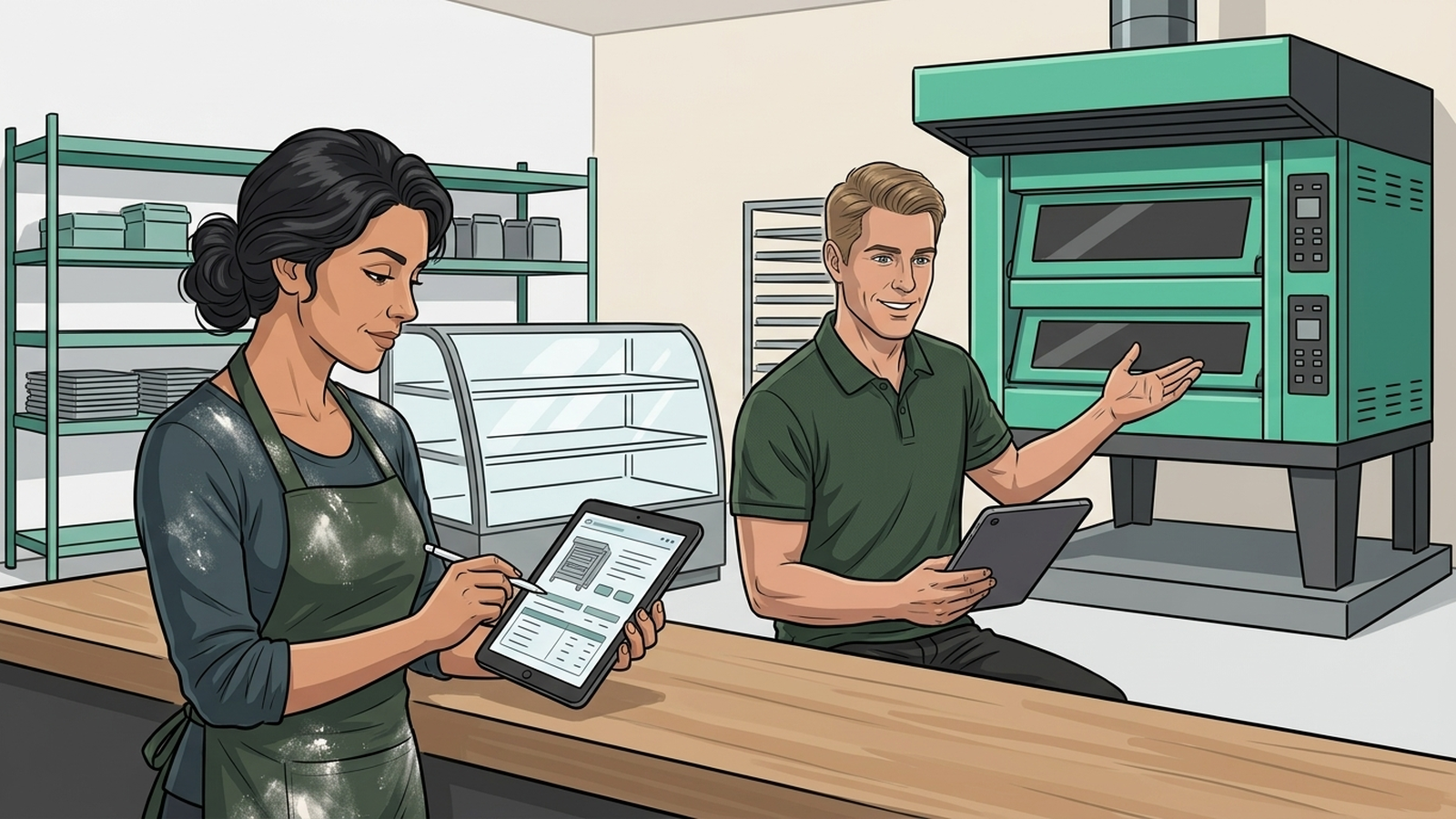
Equipment financing is a loan or lease that helps you buy business gear without writing a check for the full price today. The equipment usually serves as collateral, which is why this product can beat draining cash or forcing a short-term working capital loan onto a five-year machine. You still get underwritten. The asset helps. It does not replace a coherent borrower.
Search results for "equipment financing" are mostly lender homepages and affiliate best-of lists. Crest Capital, U.S. Bank, National Funding, NerdWallet, Bankrate: useful for product shape, weak on the part that stalls files. That part is whether your numbers, documents, and payment capacity hang together before anyone debates the forklift.
How equipment financing works
- You identify the equipment and a vendor quote or invoice.
- The lender underwrites the borrower and the asset.
- On approval, the lender pays the vendor (or reimburses a qualifying purchase) under the loan or lease documents.
- You make scheduled payments over a term that often tracks useful life better than a 12-month cash product.
- At the end, you own the equipment under a loan path, or you face lease-end options (return, extend, buy) under a lease path.
Because the lender can recover value from the asset if things go wrong, advance rates and pricing can look better than unsecured cash. That is the structural advantage. It is not a free pass.
Loan vs lease vs vendor financing
Equipment loan / equipment finance agreement. You are financing ownership. Payments cover principal and interest. The asset sits on your books in the way your accountant treats financed purchases. Section 179 and other tax rules may apply depending on your situation; that is CPA territory, not a blog promise.
Equipment lease. You pay for use. Payments can run lower. End-of-term options matter as much as the monthly number. Leases can fit tech that ages fast or equipment you may not want long term.
Vendor or captive financing. The seller partners with a finance source. Convenient, sometimes competitive, and still an underwrite. Compare it to a bank or independent equipment lender the same way you would compare any other quote: total cost, term, fees, and flexibility.
If you are using a working capital loan to stretch-pay a long-life asset, stop and reprice the idea as equipment finance. Matching term to asset life is basic hygiene.
What still gets underwritten when the asset is collateral
Lenders care about the machine and about you.
On the asset
- Type, new vs used, age, and resale market
- Vendor legitimacy and invoice detail
- Whether the advance rate makes sense if the lender had to recover
On the borrower
- Personal and business credit
- Time in business
- Cash flow that covers the payment after the equipment is in service
- Existing debt load
- Tax returns, bank statements, personal financial statement, and debt schedule that match
- For newer operators, owner experience and any down payment or injection
"Guaranteed equipment financing" and "no personal guarantee" ads are marketing edges, not the center of the market. Personal guarantees are common on small business equipment deals. If a page leads with guarantee language, read the cost and default terms twice.
What you should bring before you shop rates
Vendor paperwork. Quote or invoice with make, model, serial if available, price, and seller details.
Use of proceeds in one paragraph. What the equipment does in the business and how it supports revenue or cost control. Underwriters are not mind readers.
Financial package. Business tax returns, YTD financials, bank statements, personal financial statement, debt schedule, entity documents. Same stack discipline as any commercial loan.
Payment stress test. Model the monthly obligation against a slow month, not your best month. A machine that sits idle still has a payment due.
Credit story. If there are blemishes, explain them in writing before the lender finds them cold.
Inconsistencies across those pages are what create the runaround: another statement request, another week, another night stolen from operating the company. You still gather your own documents. The win is doing that work once and knowing the file is right.
Industry examples without the brochure gloss
- Contractor: skid steer or truck. Lenders want the invoice clean and the job pipeline believable enough to service the note.
- Restaurant or food: oven line, refrigeration, POS. Used equipment is common; age and condition affect term.
- Medical, dental, veterinary: specialty equipment with clearer resale channels, still tied to practice cash flow.
- Light manufacturing or warehouse: production or material-handling gear where uptime ties directly to revenue.
The industry changes the asset. It does not change the rule: payment capacity plus a package that matches.
How this ties to the rest of your capital stack
Equipment financing should sit next to, not on top of, your operating liquidity plan. Many owners want a business line of credit for cash swings and a separate equipment facility for hard assets. Mixing those jobs is how operating lines get maxed on purchases that never revolve off.
When you are comparing products more broadly, use the decision order in best small business loans: how to choose before you shop. Product shopping is step six. Readiness is steps one through five.
Where Zero2Ten fits
Zero2Ten is software, not an equipment lender. We do not price forklifts and we do not promise approval.
Zero2Ten HQ is there so you know how lendable you are before you are across the desk, and so you build one package you can take to more than one source. One package. Better odds. You walk in confident instead of finding out you do not know your numbers while the vendor is waiting on a PO.
Don't let the wrong loan cost you the business. Know your numbers first.
Free early access: https://www.zero2ten.biz
Common questions
- What is equipment financing?
- Equipment financing is a loan or lease used to acquire business equipment. The equipment often serves as collateral, which can improve terms versus unsecured cash. You repay over a set term while the asset helps the business earn.
- What is the difference between equipment financing and leasing?
- Financing usually means you are on a path to own the equipment, with payments covering the purchase over time. Leasing is closer to paying for use, often with lower payments and an end-of-term choice to return, extend, or buy. Tax and balance-sheet treatment differ; your CPA should weigh in on your facts.
- Do I still need strong credit if the equipment is collateral?
- Yes, the asset helps, but lenders still underwrite the borrower. Credit, cash flow, time in business, and a coherent package still matter. 'No personal guarantee' marketing is the exception, not the default, especially for smaller or newer operators.
- Can I finance used equipment?
- Often yes. Many lenders finance new and used equipment, sometimes with age limits by asset type. Used gear can mean a shorter term or lower advance rate because resale value is harder to defend.
- Should I use a working capital loan to buy equipment?
- Usually no. Working capital products are built for short operating gaps and often cost more over a long asset life. Matching a long-lived asset to an equipment loan or lease keeps payments closer to the life of the machine.
Related reading
"Need money this week: what fast cash costs"
Payroll, a repair, or a surprise bill with no time for a bank package. What 24- to 48-hour money often is, why a rainy-day line of credit beats it, and why a merchant cash advance can block an SBA loan later.
"Business loan for a sole proprietor: your personal package is the file"
For sole proprietors, you and the business are one credit story. Build personal returns, PFS, credit, and cash flow into one matching package.
"How to qualify for a business loan before you prequalify"
Qualifying is capacity plus a matching file, not a soft-pull score. Get cash flow, credit, and documents straight before you prequalify.
Business loan requirements: what banks need (and why it has to match)
Business loan requirements are more than a checklist. Here's what lenders ask for, why numbers must match, and how to prep one clean file.